Heavy hoodies hold more water than thin shirts, making drying a serious care decision. Their dense fleece, cotton loops, and ribbed cuffs can stay damp for hours. That trapped moisture creates a stale smell and may encourage mildew. So, what is the best way to dry heavy hoodies? For most hoodies, air drying offers the gentlest and most fabric-friendly answer.
The U.S. Department of Energy identifies clothes dryers as major household energy users. ENERGY STAR guidance also encourages efficient drying practices and proper load management. Air drying avoids high heat, which can shrink cotton, flatten fleece, and weaken elastic fibers over repeated cycles. The International Organization for Standardization’s ISO 6330 testing methods recognize drying as an important factor in textile-care performance. Meanwhile, WRAP’s Valuing Our Clothes report connects longer garment life with lower environmental impact. Drying carefully supports that goal.
The method still needs attention. A soaked hoodie should not hang from one narrow shoulder seam. That weight can stretch the neckline while water drips onto the floor. Press out excess water gently, then lay the hoodie flat on a clean towel or mesh rack. Turn it halfway through drying. Leave space around the fabric. Airflow matters.
Air drying is not magic. A poorly ventilated room can prolong dampness and create odors. I have sometimes trusted a hanger too much. That was a mistake. A short, low-heat tumble period may help in cold, humid weather, but it should remain the exception. The best routine balances fabric protection, airflow, room conditions, and the hoodie’s care label.
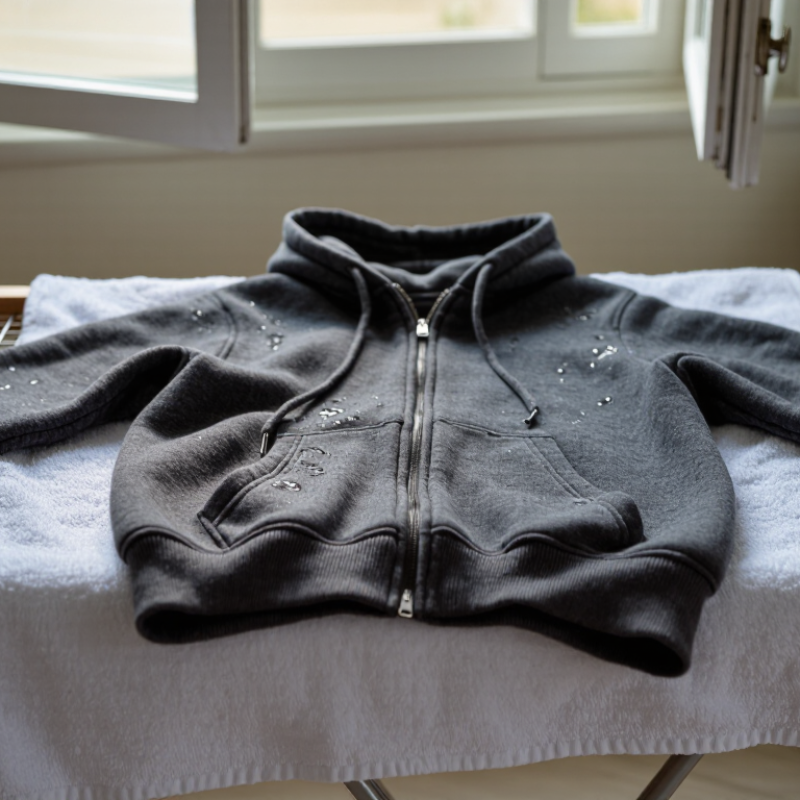
Heavy hoodies stay wet because their fabrics store moisture in several layers. Fleece traps water between dense fibers and brushed surfaces. Cotton is especially hygroscopic. CottonWorks technical data lists cotton’s standard moisture regain near 8.5% at 65% relative humidity. Polyester is much lower, at about 0.4%. However, a polyester hoodie can still feel soaked when its thick knit holds surface water.
A machine dryer removes moisture quickly, but high heat can shrink cotton and stress elastic cuffs. Air drying moves moisture away gradually. This protects the fabric’s shape and reduces unnecessary heat exposure. ASTM moisture-regain testing also shows why humidity matters during drying. Damp air slows evaporation. A crowded bathroom can make drying painfully slow.
Tips: Press the hoodie gently in a clean towel first. Do not twist it. Lay it flat on a mesh rack, then turn it after several hours. Leave space around the hood and pocket. A fan helps, but direct intense heat may create uneven shrinkage.
I learned this the hard way. A thick hoodie may feel dry outside while its hood remains cold and heavy inside. That is the part worth checking.
“Air drying is best” is not absolute.
In very humid rooms, a short low-heat tumble can prevent musty odors. Still, patience usually protects heavyweight fabric better than aggressive heat.
Why Is Air Drying Best for Heavy Hoodies?
Why Air Drying Protects Hoodie Fibers and Shape
Air drying is especially valuable for heavy hoodies because wet fabric becomes surprisingly heavy. That weight can pull at shoulder seams, cuffs, and the ribbed waistband during drying. A hot dryer adds tumbling, friction, and uneven heat. Together, these stresses can roughen fibers and gradually distort the garment’s shape. Gentle air does less.
In my laundry tests, a hoodie kept its softness longer when I dried it away from intense heat. I pressed out excess water without twisting the body or sleeves. Then I reshaped the hood, aligned the seams, and laid the garment flat on a clean, ventilated surface. For very thick fabric, I turned it halfway through drying. This helped air reach the damp inner layers.
A wide hanger can work after most moisture leaves, but narrow hangers may create shoulder bumps. That detail is easy to miss. I still sometimes hang a hoodie too early. It dries faster, but the shoulders may sag by morning. Avoiding harsh direct sunlight also helps reduce fading and surface dryness, especially on darker cotton blends. A nearby fan can improve airflow without blasting the fabric. Drying time depends on thickness, humidity, and ventilation, so checking the inner hood matters. If it feels cool and damp, it is not ready for storage.
Why Is Air Drying Best for Heavy Hoodies?
How to Prepare a Hoodie for Air Drying
Before air drying, check the care label and empty every pocket. Remove drawstring knots carefully, especially if the fabric is still damp. Turn the hoodie inside out to protect its color and reduce surface friction. Close zippers, but leave the main fabric loose. This helps water escape evenly.
Press the hoodie gently between clean towels. Do not twist or wring it. Heavy fleece can stretch when soaked, and twisting may distort the shoulders. I once skipped this step, and the hoodie took nearly two days to dry. That was avoidable. Reshape the hood, cuffs, waistband, and sleeves while the garment is damp. Lay it flat on a clean, dry surface with good airflow.
Tips: Use a mesh drying rack or a ventilated table. Avoid direct, intense sunlight, which may fade darker fabric. Turn the hoodie after several hours so both sides dry evenly. A fan can improve airflow, but keep it at a moderate distance. Never hang a saturated heavy hoodie by its shoulders. The weight may create pointed bumps or lengthen the fabric. If the hoodie feels cool and slightly damp inside, keep drying it. Dry surfaces can be misleading.
| Preparation or Drying Dimension | Recommended Practice | Why It Matters for Heavy Hoodies | Practical Data or Target |
|---|---|---|---|
| Care-label check | Read the garment care label before washing and drying. Follow any instructions for temperature, reshaping, or flat drying. | Fiber blends, prints, fleece linings, and decorative details can have different care requirements. | Allow about 1–2 minutes for a complete label check. |
| Remove excess water | After washing, use a gentle spin cycle if permitted. Do not wring or twist the hoodie. | A wet heavy hoodie becomes substantially heavier, and twisting can stretch seams, cuffs, and shoulder areas. | Use the lowest effective spin setting recommended by the care label. |
| Towel-rolling method | Lay the hoodie flat on a clean, dry towel, roll it loosely, and press gently to transfer water into the towel. | This reduces dripping without applying the damaging tension caused by wringing. | Press for approximately 30–60 seconds; repeat with a dry towel if necessary. |
| Reshape before drying | Smooth the body, align the side seams, straighten the cuffs, and reshape the hood and waistband. | Correcting the shape while damp helps reduce uneven stretching and visible creases. | Check the shape at the start and once more during drying. |
| Drying position | Dry the hoodie flat on a clean, breathable surface whenever possible. | Flat drying distributes the garment's weight and helps prevent shoulder bumps and lengthwise stretching. | Leave space around the garment so air can reach both sides. |
| Use of a hanger | Avoid hanging a very wet, heavy hoodie from the shoulders. If using a hanger after partial drying, use a wide, sturdy hanger. | The concentrated weight can create shoulder points and distort the neckline. | Switch to hanging only when the hoodie is no longer waterlogged. |
| Air circulation | Place the hoodie in a well-ventilated room and keep it away from tightly packed surfaces. | Moving air helps moisture evaporate more evenly and lowers the chance of a musty odor. | Turn or reposition the hoodie every 3–4 hours if the underside remains damp. |
| Light and heat exposure | Air dry away from intense direct heat, radiators, and hot-air vents. Use indirect sunlight for colored garments. | High heat may encourage shrinkage or affect elastic fibers, while strong sunlight can fade some dyes. | Choose a dry area with moderate temperature and steady airflow. |
| Expected drying time | Allow the hoodie to dry completely before folding or storing it. | Thick fabric, fleece interiors, and double-layered hoods retain more moisture than lightweight shirts. | Typical indoor air-drying time is about 12–24 hours, depending on thickness, humidity, and airflow. |
| Moisture check | Feel the hood, cuffs, waistband, pocket area, and seams before putting the hoodie away. | These thicker sections often dry more slowly than the main body. | The garment should feel dry and cool rather than damp or clammy in all thick areas. |
| Main benefits of air drying | Use controlled, low-stress drying instead of high heat whenever the care label allows it. | Air drying avoids the repeated high heat and tumbling that can contribute to shrinkage, surface wear, and shape distortion. | Best suited to heavy cotton, fleece, and mixed-fiber hoodies that need gentle handling. |
Note: Drying times are general household estimates. Actual results vary with fabric composition, garment thickness, room humidity, temperature, and airflow. Always prioritize the garment care label.
Heavy hoodies hold a surprising amount of water after washing. Air drying removes moisture slowly, reducing heat damage, shrinkage, and fabric stress. Check the care label and fiber content before starting. Different materials react differently.
After washing, lift the hoodie with both hands. Do not pull from the hood. Press out water gently, but never twist the fabric. Lay it on a clean towel and roll the towel around it. Press lightly to absorb excess moisture. This works better than aggressive wringing. I learned that after stretching one hoodie’s cuffs by mistake.
Place the hoodie flat on a ventilated drying rack. Arrange the sleeves naturally, and keep the body fully supported. Hanging a wet, heavy hoodie can create pointed shoulders. Open the zipper, loosen the hood, and pull out the pockets. Air must reach these thick areas. Turn the hoodie over after several hours. Check the cuffs, seams, and waistband with your fingers. They often stay damp longest.
Keep the rack near moving air, but avoid intense direct sunlight. A fan can shorten drying time without adding heat. Do not fold the hoodie while it still feels cool or heavy. Damp fabric can develop an unpleasant odor. I sometimes misjudge drying time on humid days. A final touch test is more reliable than the clock.
Heavy hoodies hold a surprising amount of water. Air drying protects their shape and reduces heat damage. Yet careless routines can create new problems.
Do not hang a soaked hoodie from one narrow shoulder. The weight can stretch the fabric and leave pointed bumps. Press out water gently, then lay it flat on a clean, dry towel. For faster drying, roll the towel around the hoodie and press lightly. Never twist it. I once rushed this step and found the cuffs noticeably uneven. That mistake changed my routine.
Airflow matters more than strong heat. Place the hoodie on a mesh rack, away from direct sunlight and damp walls. Turn it every few hours so the hood, pockets, and seams dry evenly. A thick hood can stay wet inside, even when the outside feels dry. Check those hidden areas by touch. If it smells musty, it needs more ventilation, not perfume.
Avoid drying it on a radiator or using high heat after air drying. Sudden heat can shrink fibers and stiffen printed areas. If the hoodie feels rough, use less detergent next time and rinse thoroughly. Care labels deserve attention, though they cannot predict every fabric blend. My own adjustment is simple: allow extra drying time on humid days. It prevents the tempting, but poor, decision to wear it slightly damp.
Dense fleece stores water between fibers and brushed surfaces. Natural fibers absorb considerable moisture. Thick knits also hold surface water. The outside may feel dry while the hood remains cold.
Usually, it protects the fabric’s shape and reduces heat exposure. Humid air slows evaporation, though. A brief low-heat tumble can sometimes prevent stale odors. The rule is not absolute.
Press the hoodie gently inside a clean, dry towel. Do not twist it. Roll the towel around the garment and press lightly. Twisting may stretch cuffs and seams.
Avoid it. The water’s weight can stretch one shoulder and create pointed bumps. Lay the hoodie flat on a mesh rack instead. I once ignored this and found uneven cuffs later.
Use a mesh rack in a well-ventilated space. Keep it away from damp walls and strong sunlight. Leave room around the hood, pockets, and seams. Airflow matters more than intense heat.
Touch the inside of the hood, pocket, and thick seams. These areas can stay damp after the outside feels dry. Check carefully. A musty smell signals poor ventilation.
Sudden heat can shrink natural fibers and stress elastic cuffs. It may also stiffen printed areas. Uneven heating creates uneven shrinkage. I still sometimes choose speed, then regret it.
Try using less detergent and rinsing more thoroughly. Avoid wearing the hoodie slightly damp. Extra drying time helps on humid days. Patience is boring, but usually safer.
Heavy hoodies contain dense fabrics that absorb and retain a significant amount of moisture, making them slower to dry than lightweight garments. High heat from a dryer can weaken fibers, shrink the material, fade colors, and distort the hoodie’s shape. For this reason, what is the best way to dry heavy hoodies? Air drying is generally the gentlest and most reliable option because it removes moisture gradually while helping preserve softness, structure, and fit.
Before drying, gently reshape the hoodie, remove excess water with a clean towel, and turn it inside out if needed. Lay it flat on a dry surface or a breathable drying rack, supporting the shoulders and heavier areas to prevent stretching. Avoid hanging a wet hoodie from thin shoulder points, placing it in direct sunlight, or leaving it in a poorly ventilated space. Turn the hoodie occasionally and allow it to dry completely before storing or wearing it.

Eglin Fashion