For global buyers, choosing between trousers and chinos is not a simple matter of color or price. Fabric, construction, fit, and intended use can change the product’s value significantly. A pair of dark wool trousers may suit a formal meeting, while cotton chinos may work better for travel, retail uniforms, or everyday office wear.
So, what is the difference between trousers and chinos? The answer usually begins with fabric and finish. Trousers often use wool, polyester blends, or refined synthetic materials. Chinos are commonly made from cotton twill, which feels softer and shows a subtle diagonal weave. However, regional terminology can be inconsistent. Some suppliers call nearly every tailored lower garment “trousers.”
Details matter.
From practical sourcing experience, buyers should inspect waistband construction, stitching density, pocket reinforcement, fabric weight, and colorfastness. A lightweight chino may feel comfortable in Singapore but perform poorly in a cold European market. A heavy trouser fabric may look premium but become uncomfortable during long warehouse shifts.
This guide compares five important differences, including fabric, formality, durability, fit, and purchasing considerations. It also explains where the categories overlap. Not every chino is casual, and not every trouser is formal. That assumption can mislead product selection.
Measurements should be confirmed carefully. Supplier photos are useful, but they cannot replace a physical sample. Even trusted manufacturers may interpret “slim fit” differently. Buyers should review size charts, seam quality, care labels, and production consistency before placing larger orders. Small checks prevent expensive surprises.
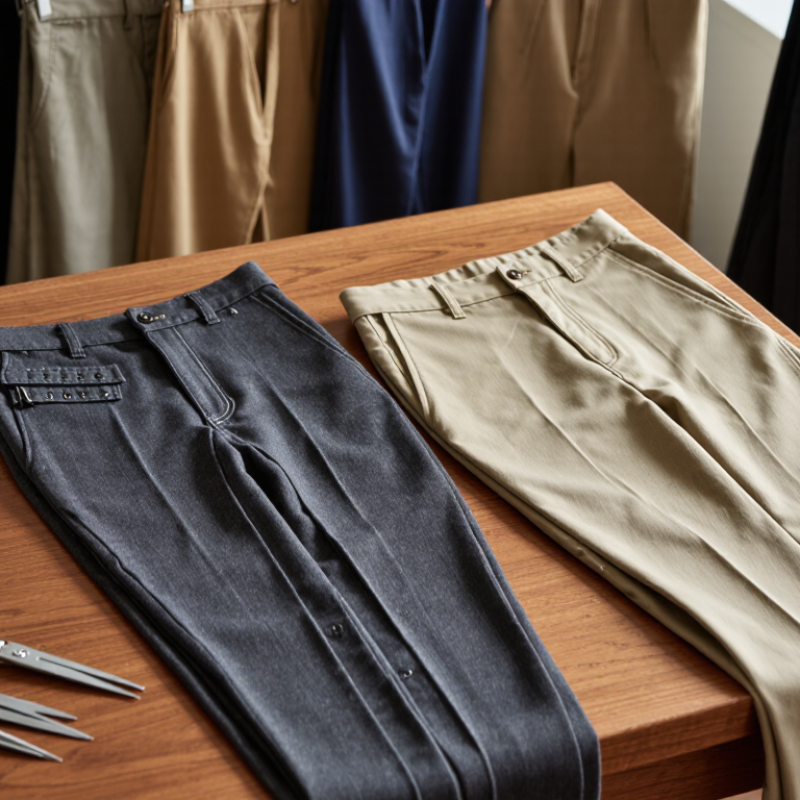
In global clothing terminology, trousers usually means the broad category of lower-body garments. It includes dress trousers, work trousers, uniform trousers, and casual woven pants. Chinos are a narrower type, traditionally made from cotton twill with a smooth finish. The word “trousers” is more common in British and international trade English. In American retail, “pants” often carries the same meaning.
The difference is not perfectly clean. Some suppliers call polyester-blend chinos “casual trousers,” while others label tailored cotton trousers as chinos. In wholesale briefs, fabric, cut, and end use matter more than the name alone. A 2024 Textile Exchange report recorded 124 million tonnes of global fiber production in 2023. That scale makes fiber wording important for buyers comparing cotton, recycled polyester, and blended styles. A product title should state composition, weave, weight, rise, and leg shape. “Slim chino” is useful, but incomplete.
Tips: Ask suppliers for a technical specification sheet. Check whether “trouser” means a formal silhouette or simply any woven bottom. Request a fabric swatch, because twill can feel soft, dry, heavy, or stiff. Confirm regional sizing too. I have seen small terminology gaps create large sampling errors. That part deserves more attention.
Trousers is a broad category, while chinos usually describe a cotton-based trouser with a recognizable twill weave. In production checks, I inspect the fabric under direct light. Chinos often show diagonal lines, created by twill construction, and feel lighter than many wool or wool-blend trousers. This difference affects breathability, drape, and packing performance for global buyers.
Fabric choice changes the product’s purpose. Wool trousers usually offer a smoother fall and better crease recovery for formal markets. Cotton chinos feel more relaxed and can tolerate frequent washing, although poor finishing may cause fading or shrinkage. Color also matters. Navy, charcoal, and black often support business use, while khaki, olive, and stone suggest casual wear. Color is not a fixed rule.
Construction reveals quality more clearly than appearance alone. Check waistband stability, pocket reinforcement, zipper alignment, seam density, and hem consistency. A chino may use visible topstitching and sturdy belt loops, while dress trousers often use cleaner, less noticeable details. Ask for wash-test results and dimensional measurements before placing a large order. Small errors become expensive at scale.
The boundary is not perfectly clean. Some cotton trousers look formal, and some tailored trousers use casual weaves. That is where buyers need careful judgment. Personally, I would not approve a sample from photographs alone. Supplier claims can sound convincing, but touch, measurement, and repeated-wash testing often tell a different story.
| Comparison Dimension | Trousers | Chinos | Typical Buyer Impact | Practical Selection Guidance |
|---|---|---|---|---|
| 1. Fabric Composition | Commonly made from wool, wool blends, cotton blends, linen blends, or synthetic-performance fabrics. The fiber choice can range from formal worsted wool to lightweight technical fabric. | Traditionally made from 100% cotton or cotton-rich blends, often with a small amount of elastane for stretch and comfort. | Composition affects breathability, wrinkle recovery, durability, stretch, comfort, care requirements, and end-use positioning. | Choose wool or wool blends for tailoring and temperature regulation; choose cotton-rich blends for casual use; confirm fiber percentages on the technical specification sheet. |
| 2. Weave and Surface Texture | May use plain weave, twill, gabardine, flannel, tropical wool, or other constructions. The surface may be smooth, brushed, textured, or subtly patterned. | Most often uses a cotton twill weave, which creates diagonal lines on the fabric surface and provides a balance of strength, drape, and casual texture. | Weave influences abrasion resistance, drape, visual formality, color depth, and performance after repeated washing. | Use compact twill for durable everyday programs; use smoother, finer weaves when a cleaner and more formal appearance is required. |
| 3. Color Range and Appearance | Often available in black, charcoal, navy, grey, brown, and seasonal shades. Patterns such as checks, pinstripes, and subtle windowpanes are also common. | Common colors include khaki, beige, navy, olive, stone, grey, and darker earth tones. The twill surface can create a slightly dimensional appearance. | Color affects wardrobe versatility, regional demand, product segmentation, colorfastness testing, and suitability for uniforms or corporate programs. | Build core ranges around navy, charcoal, black, khaki, and beige; request colorfastness data when products will be exposed to frequent washing or strong sunlight. |
| 4. Construction and Tailoring Details | More likely to include a structured waistband, belt loops or side adjusters, crease lines, slanted or welt pockets, lining, hook-and-bar closures, and tailored finishing. | Typically features a simpler waistband, button closure, belt loops, front slash pockets, rear welt or buttoned pockets, and less internal structure. | Construction determines perceived quality, production cost, comfort, repairability, fit consistency, and the garment’s formal or casual positioning. | For tailored trousers, specify waistband dimensions, pocket reinforcement, seam allowance, lining, and crease stability; for chinos, prioritize pocket durability and clean topstitching. |
| 5. Fit, Use, and Care Profile | Usually designed for business, formal, smart-casual, travel, or uniform use. Fit may be tailored, regular, slim, or relaxed, with a stronger emphasis on drape and crease appearance. | Generally positioned for casual, business-casual, travel, outdoor-lifestyle, and everyday use. Fits commonly include slim, straight, tapered, and relaxed options. | The intended use affects sizing tolerance, stretch requirements, laundering instructions, packaging, and expected replacement cycle. | Specify measurements in centimeters or inches, including waist, hip, thigh, knee, inseam, rise, and leg opening; test shrinkage and color change after the planned care process. |
| Buyer Summary: “Trousers” is a broad category that can include formal and casual styles, while “chinos” usually refers to cotton-based twill trousers with a more relaxed, everyday character. Actual performance depends on fiber composition, fabric weight, weave density, finishing, construction quality, and garment specifications. | ||||
Trousers usually create a cleaner, sharper silhouette than chinos. Their fabric often hangs smoothly, especially when made from wool or a wool blend. Chinos commonly use cotton twill, which feels more relaxed and shows a subtle diagonal texture. Fit depends on the cut, not the garment name. A slim trouser may feel tighter than a straight chino. Check the seat, thigh, and knee before judging the style.
Comfort also changes with fabric weight and stretch. Chinos can feel easy in warm weather, particularly with breathable cotton and a modest elastane content. Trousers may feel cooler when made from lightweight wool, despite their more formal appearance. Heavy cotton can become stiff after long travel. That detail is easy to miss. A flexible waistband helps, but excessive stretch can make the garment lose shape.
Formality is the clearest difference for many global buyers. Pressed trousers suit offices, ceremonies, and structured business settings. Chinos work better with knitwear, casual shirts, and unstructured jackets. However, local dress codes vary. In some markets, dark chinos pass in relaxed offices; elsewhere, they still appear too casual. I have also found that color changes the message. Navy or charcoal looks restrained, while tan and olive feel noticeably informal. These guidelines are useful, but not perfect. Fit, fabric, and styling can overturn the expected result.
Trousers and chinos suit different occasions and climates, even when their cuts look similar. In my garment-fitting experience, trousers usually offer a cleaner, more formal appearance. Their wool, polyester, or blended fabrics often hold a sharp crease. They suit offices, business meetings, weddings, and evening restaurants. Lightweight wool breathes well in mild summers, while flannel trousers provide useful warmth in cold weather. Heavy wool can feel oppressive in humid cities. That detail is easy to underestimate.
Chinos are usually made from cotton twill, giving them a softer and more relaxed character. They work well for travel, weekend lunches, casual offices, and outdoor gatherings. In warm climates, lightweight cotton chinos feel comfortable when the weave allows airflow. However, dense cotton may retain moisture during tropical weather. Stretch fabrics improve movement, but excessive stretch can reduce shape retention. Chinos also handle informal settings better than sharply tailored trousers.
Climate changes the practical choice. In dry heat, breathable trousers with a half lining may feel cooler than fully lined chinos. During light rain, neither garment is truly waterproof, though treated fabric dries faster. For cold travel, trousers with a heavier weave pair effectively with thermal layers. I once selected thick chinos for a humid business trip, and they became uncomfortable by midday. That mistake taught me to check fabric weight, lining, pocket depth, and drying time before judging appearance. Local dress expectations matter too, especially when an event combines indoor cooling with outdoor heat.
Global buyers should compare trousers and chinos by construction, not product names. Trousers often use wool, polyester, viscose, or blended fabrics for office and formal markets. Chinos usually use cotton twill, with visible diagonal lines and a more relaxed visual character. Yet factories may describe lightweight chinos as trousers. Terminology is inconsistent. Request fabric composition, weight, weave, and finished measurements before approving samples.
Fit changes everything. Compare the rise, waistband width, thigh room, leg opening, and inseam tolerance. A slim pattern may sell well in one region but feel restrictive elsewhere. Ask for size grading based on actual body data, not copied charts. Sample trousers after washing. Chinos can shrink, twist, or lose shape around the knees. I have seen a good-looking sample fail after repeated laundering.
Color and performance also matter. Black formal trousers need strong colorfastness and low pilling. Khaki chinos should resist shade variation between production lots. Check pocket strength, zipper function, belt-loop spacing, seam density, and pressing quality. A small defect becomes expensive across thousands of units. Buyers should compare minimum order quantities, lead times, packaging dimensions, and inspection procedures. A cheaper fabric is not always cheaper in use. That assumption needs review. For warm markets, breathable cotton blends may outperform heavy fabric, but only testing can confirm it.
“Trousers” usually describes a broad category of lower-body woven garments. It includes formal, work, uniform, and casual styles. In some markets, “pants” means the same thing.
Chinos are usually cotton-based trousers made with twill fabric. Under direct light, the fabric often shows diagonal lines. Their appearance is generally relaxed rather than highly formal.
No. The boundary is not perfectly clear. Some suppliers call lightweight chinos casual trousers. Others call tailored cotton trousers chinos.
Request composition, fabric weight, weave, rise, leg shape, and finished measurements. Ask for a technical specification sheet. A product title alone is incomplete.
Wool may provide smoother drape and better crease recovery. Cotton chinos often feel relaxed and tolerate frequent washing. Blended fabrics may improve breathability or durability, but testing remains necessary.
Check waistband stability, pocket reinforcement, zipper alignment, belt-loop spacing, seam density, and hem consistency. Small defects become costly across large orders. Appearance can mislead.
Compare the rise, thigh room, waistband width, leg opening, and inseam tolerance. Slim patterns may feel restrictive in some regions. Use actual body data instead of copied size charts.
Request fabric swatches, wash-test results, dimensional measurements, and production inspection procedures. Wash samples repeatedly. Chinos may shrink, twist, fade, or lose knee shape.
Navy, charcoal, and black often suit business clothing. Khaki, olive, and stone usually suggest casual wear. These are tendencies, not fixed rules. Test colorfastness and lot consistency.
Not necessarily. A cheaper fabric may shrink, pill, or require more returns. Compare performance, packaging, lead time, minimum quantities, and inspection costs. That assumption needs review.
Understanding what is the difference between trousers and chinos helps global buyers select the right garment for different markets and customer needs. Trousers is a broad term for tailored or casual legwear, while chinos usually refer to cotton-based pants with a distinctive twill weave and a more relaxed, practical character. Differences in fabric weight, weave, color range, stitching, waistband design, and finishing can affect durability, appearance, comfort, and production cost. Trousers may use wool blends, synthetics, linen, or other fabrics, whereas chinos commonly emphasize breathable cotton or cotton blends.
Fit and formality also vary. Trousers can range from slim formal styles to relaxed everyday cuts, while chinos are generally versatile, comfortable, and less formal. Trousers may suit offices, ceremonies, and cooler climates, while chinos work well for travel, casual workplaces, and warmer conditions when made from lightweight fabric. Before purchasing, global buyers should compare material composition, size standards, fit, color consistency, construction quality, care requirements, climate suitability, and target customer preferences.

Eglin Fashion