A zip-up hoodie can look polished beneath a coat, but the proportions need careful attention. This guide explains how to style a zip up hoodie under a coat without creating unnecessary bulk. The goal is practical layering that feels warm, comfortable, and intentional.
Start with the hoodie’s fabric and fit. A midweight cotton blend usually layers better than thick fleece. Its zipper should lie flat, especially beneath a tailored wool coat. The shoulders should sit naturally, while the cuffs should not bunch heavily at the wrists. Leave the hood visible for a relaxed finish, or tuck it neatly for a cleaner outline. A small contrast helps. Charcoal, navy, black, and cream create dependable combinations, while muted green or burgundy can add controlled color.
For casual outfits, pair the layers with straight-leg jeans and clean leather or canvas sneakers. For a sharper appearance, choose tailored trousers and simple boots. Your shoes matter here. They anchor the extra volume above. In colder weather, check the full outfit in a mirror before leaving. Walk, sit, and raise your arms. The coat should still close comfortably, and the hoodie should not pull across the chest.
I have found that many styling rules oversimplify this combination. A slim hoodie may work under a structured coat, but a heavier design can look better with a roomier outer layer. Try on both pieces together. Observe the neckline, sleeve length, and hem relationship. Small adjustments often make the outfit feel considered, not accidental. Mistakes are useful; they reveal where comfort and appearance need better balance.
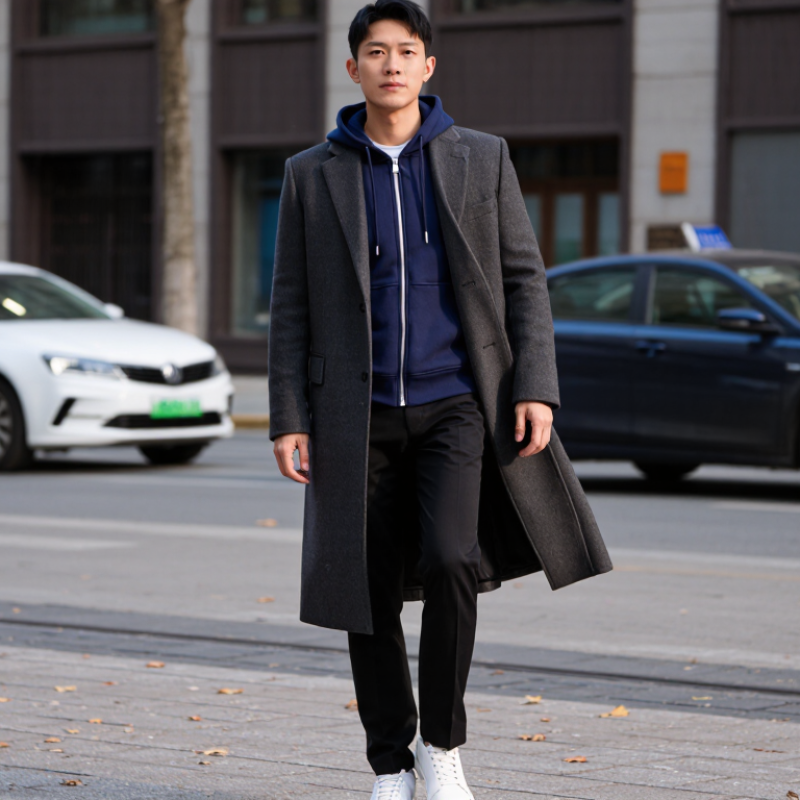
A zip-up hoodie can add warmth beneath a coat without creating a bulky silhouette. The fit matters more than the color or fabric. Choose a hoodie with slim sleeves and a flat, flexible zipper. Its shoulder seams should sit close to your natural shoulders. Extra fabric there can bunch beneath the coat.
I usually test the layers together before leaving home. Zip the hoodie fully, then put on the coat. You should move both arms freely. Check the underarm area, chest, and back for pulling. A comfortable hoodie should leave about one finger of space at the collar. The hood should lie flat, rather than forming a lump behind your neck. Thin cotton blends often work well under wool or quilted coats. Heavier fleece may feel warm, but it can restrict movement quickly.
Length deserves attention, too. The hoodie hem should sit slightly below your waistband, but not far below the coat. A shorter coat may reveal the hem intentionally. Still, uneven layers can look accidental. I once chose a roomy hoodie for extra comfort, but the sleeves gathered badly at my wrists. That mistake changed my preference for close-fitting cuffs. Try sitting down as well. A hoodie that feels fine while standing may pull across your stomach in a car or chair. Some people prefer leaving the zipper partly open for airflow, though this can expose a wrinkled shirt underneath.
How to Style a Zip Up Hoodie Under a Coat
A zip-up hoodie changes a coat’s fit more than a thin sweater does. Its hood adds volume around the neck, while fleece or dense cotton increases the body’s thickness. Choose a coat that matches that weight. A light hoodie fits comfortably beneath a structured wool coat with moderate room. A heavyweight hoodie needs wider armholes, stronger fabric, and a relaxed cut. Otherwise, the sleeves bunch at the wrists and the zipper presses against your chest. I have made that mistake. It looked fine standing still, but driving felt restrictive.
Start with the shoulders. The coat should sit flat without pulling across the back. A straight or gently oversized shape usually balances a rounded hood. A narrow tailored coat can still work, but only with a thin, flexible hoodie. Keep the coat’s hem slightly longer than the hoodie to create a clean vertical line. If the hoodie hangs below the coat, the outfit may look accidental rather than layered. Check the collar, too. A high hoodie neckline needs space beneath the coat’s lapels or stand collar.
Try both pieces together before removing the tags. Zip the hoodie fully, raise your arms, and sit down. These simple movements reveal pressure points quickly. A coat that fits perfectly over a shirt may fail over fleece. Consider a smoother hoodie lining if the coat catches easily. That detail is easy to overlook. You may prefer a slightly larger coat, but excessive room can erase the outfit’s shape and make the shoulders look tired.
How to Style a Zip Up Hoodie Under a Coat
A zip-up hoodie can sit neatly under a coat when each layer has a clear role. I prefer a medium-weight hoodie with a flat, flexible hood. Thick fleece often creates a lump behind the neck. Check the shoulder seams before leaving home. They should rest naturally, not pull across your upper arms.
Keep the hoodie slightly slimmer than the coat. Zip it halfway, then let the coat hang open for a relaxed vertical line. For a sharper silhouette, close both layers and leave the coat collar slightly raised. The hood should lie flat against the back, not spill over the shoulders. Smooth the fabric with your hands. Small adjustments matter.
Use contrast carefully. A dark coat with a lighter hoodie creates depth without looking busy. Match the hoodie hem to the coat’s inner shape, especially with shorter outerwear. With a long coat, keep the hoodie hem close to the waistline. I sometimes choose a larger hoodie for comfort, but the result can look heavy around the chest. That is where I rethink the outfit. A mirror check from the side usually reveals more than a front view. Narrow trousers and clean sneakers or boots help preserve balance without making the layers feel stiff.
A zip-up hoodie can sit neatly under a coat, but proportion matters more than hype. I usually choose a medium-weight hoodie with flat seams and a close hood. Bulky fleece can crowd the collar and create a stiff silhouette. A wool coat benefits from smooth cotton or fine-knit fabric. For a casual coat, textured fleece adds warmth and visual depth. Leave the zip partly open. This shows the shirt beneath and prevents a tight, stacked neckline. I learned this after wearing a thick hoodie on a windy day. The outfit felt protective, but my shoulders looked wider than intended.
Color coordination keeps the layers deliberate. Start with a quiet base, such as charcoal trousers and a cream shirt. Then choose a hoodie slightly lighter or darker than the coat. A charcoal hoodie under camel creates gentle contrast. Navy under gray feels restrained and polished. If both layers are dark, add light socks or a pale scarf near the face. Avoid matching every item exactly. It can look flat. I sometimes break this rule with similar tones, though the result depends on fabric and daylight. Always check the outfit outside.
Accessories should connect the textures, not compete with them. A ribbed beanie echoes a knitted scarf, while leather gloves sharpen a soft hoodie. Keep hardware simple when the coat has large buttons. A compact crossbody bag can define the waist, but thick straps may distort the hoodie’s front. Clean sneakers make the look relaxed; plain boots make it more structured. Check the hood after adding a scarf. It may bunch. Adjusting one layer often matters more than adding another.
| Style Direction | Coat Color | Hoodie Color | Texture Pairing | Bottoms | Accessories | Best Use | Visual Effect |
|---|---|---|---|---|---|---|---|
| Clean Neutral Layers | Camel wool-blend coat | Heather gray | Soft fleece under a smooth, structured coat | Dark indigo jeans or charcoal trousers | Brown leather belt, simple watch, wool scarf | Daily city wear and smart-casual settings | Balanced, polished, and approachable |
| Monochrome Minimal | Black overcoat | Charcoal gray | Brushed cotton hoodie with a matte wool coat | Black straight-leg trousers or jeans | Black leather boots, silver-toned watch, plain beanie | Commuting, evenings, and modern casual outfits | Streamlined and visually taller |
| Soft Contrast | Navy peacoat | Oatmeal or warm beige | Textured knit or cotton fleece against dense wool | Medium-wash jeans or beige chinos | Navy knit cap, tan boots, patterned scarf | Weekend outings and cool-weather travel | Warm, relaxed, and layered |
| Earth-Tone Utility | Olive field coat | Rust, cream, or muted mustard | Cotton jersey with durable canvas or twill | Dark denim or brown five-pocket trousers | Canvas crossbody bag, leather boots, ribbed socks | Outdoor errands and casual fall dressing | Practical, rugged, and coordinated |
| Light-on-Dark Layering | Dark charcoal coat | White, ivory, or light gray | Smooth jersey hoodie with a brushed or napped coat | Black jeans or dark gray trousers | White sneakers, dark sunglasses, compact backpack | Casual social plans and transitional weather | Creates a clear focal layer near the face |
| Subtle Color Accent | Stone, gray, or navy coat | Burgundy, forest green, or muted blue | Low-pile fleece with a clean cotton or wool shell | Neutral chinos or dark straight-leg denim | Accessory repeated in a similar tone, such as a scarf or socks | Relaxed occasions when a muted color is desired | Adds personality without overwhelming the coat |
| Rain-Ready Casual | Water-resistant black or navy shell coat | Medium gray or deep navy | Lightweight cotton or synthetic fleece under a smooth shell | Tapered dark trousers or water-resistant pants | Water-resistant sneakers or boots, compact umbrella, cap | Wet commutes and changeable weather | Functional without appearing bulky |
| Refined Casual | Cream or light gray topcoat | Black, espresso brown, or deep navy | Fine-gauge hoodie with a smooth, tailored coat | Pressed wool trousers or dark denim | Minimal leather sneakers or loafers, structured tote, slim scarf | Casual office environments and dressier daytime plans | Elevates the hoodie while maintaining comfort |
How to Style a Zip Up Hoodie Under a Coat
A zip up hoodie can add warmth without making a coat feel formal or stiff. Choose a slim or medium-weight hoodie for easier layering. The hood should sit flat against your neck. If it bunches, the coat may look crowded. For cold, dry weather, wear a cotton hoodie under a wool-blend coat. Add a light thermal shirt when temperatures drop. I often misjudge warmth, so I check the full outfit before leaving.
Weather should guide your fabric choices. A water-resistant coat works better during light rain or wet commutes. Avoid thick fleece under a narrow coat, since trapped heat can become uncomfortable indoors. For casual plans, pair the hoodie with straight-leg trousers and simple shoes. A neutral hoodie can also soften a structured coat for dinner or a relaxed office. Keep the colors controlled. Too many shades may distract from the clean layers.
Tips: Zip the hoodie halfway for ventilation. Leave room at the shoulders. Test arm movement before buying. For windy streets, secure the hood beneath the coat collar. In heated rooms, choose a hoodie that removes easily. My practical mistake was ignoring sleeve length; exposed cuffs quickly feel cold. Comfort matters more than a perfect silhouette.
Choose a straight or gently oversized coat with moderate room. Its shoulders should lie flat without pulling across your back. A rounded hood needs space around the collar. Very narrow coats usually suit only thin, flexible hoodies.
Keep the coat hem slightly longer than the hoodie. This creates a clean vertical line. A hoodie hanging below the coat can look accidental. Check the length while standing and sitting.
Choose a coat with wider armholes, stronger fabric, and a relaxed cut. Dense fleece can crowd the sleeves and chest. Otherwise, the zipper may press against your body. It may look fine standing still.
Wear both pieces before removing their tags. Zip the hoodie fully, raise your arms, and sit down. Notice pressure around your wrists, chest, and shoulders. Driving can reveal problems that a mirror misses.
Smooth cotton, fine knit fabric, or a less bulky lining usually works well. These materials slide beneath the coat more easily. Thick fleece may create a stiff collar and wider shoulders. I sometimes underestimate that effect.
Leave the zipper partly open when comfortable. This reveals the shirt underneath and reduces a stacked neckline. A fully closed hoodie can feel tight beneath lapels or a stand collar. Not always.
Choose a hoodie slightly lighter or darker than the coat. A charcoal hoodie with camel creates gentle contrast. Navy beneath gray looks calm and polished. Avoid matching every item exactly, because the outfit may appear flat.
Match accessories with the outfit’s textures rather than adding too many details. A ribbed beanie can echo a knitted scarf. Leather gloves add structure to soft fleece. Simple shoes keep the look relaxed, while plain boots make it sharper.
Check the hood again after adding a scarf. The fabric may bunch around your neck. A compact crossbody bag can define the waist, but thick straps may distort the hoodie front. Adjust one layer before adding another.
Learning how to style a zip up hoodie under a coat starts with choosing pieces that work comfortably together. Select a zip-up hoodie with a streamlined fit and a fabric weight that will not create unnecessary bulk. Then pair it with a coat that complements the hoodie’s shape, such as a relaxed outer layer over a thicker hoodie or a structured coat over a lighter one. Keep the layers smooth by adjusting the zipper, cuffs, and hem so the outfit creates a clean, balanced silhouette.
To complete the look, coordinate the colors and textures of the hoodie and coat without making them appear overly matched. Simple accessories, such as a scarf, hat, or practical bag, can add personality while maintaining harmony. Consider the temperature, activity, and setting when choosing materials and footwear. With thoughtful proportions, comfortable layers, and adaptable details, how to style a zip up hoodie under a coat becomes an easy approach for creating a polished outfit suitable for casual days, commuting, or relaxed social occasions.

Eglin Fashion